By Izzy Woodruff
For this month’s Member Spotlight, we spoke with NCRC’s President and CEO, Jesse Van Tol, to learn more about the integral role community benefits agreements (CBAs) play in creating a Just Economy.

Photo Credit: NCRC
The ABCs of CBAs
Last month, the National Community Reinvestment Coalition (NCRC) announced an $80 billion community benefits agreement (CBA) with Ohio-based Huntington Bank. As an annualized commitment amount relative to bank assets, this is NCRC’s largest CBA to date. So, what exactly is a CBA?
“The basic idea behind a CBA is the same idea that is central to the Community Reinvestment Act,” says NCRC President and CEO, Jesse Van Tol. “Communities, not banks, should determine and define their own credit needs.”
The Community Reinvestment Act (CRA) was passed in 1977 to combat redlining, and it remains a crucial driver of affordable housing investment throughout the country. CBAs help banks meet the CRA’s requirements, and they are central to NCRC’s mission to advance a Just Economy in which people can build wealth and provide for their families with stability and dignity. To that end, NCRC also strongly advocates for access to housing because, as Van Tol explains, “housing plays such a critical role in a Just Economy, and homeownership is one of the major paths to building wealth.”

Photo Credit: FederalReserveHistory.org
“As more and more banks grow and consolidate into regional and national banks, NCRC’s facilitation of CBAs connects them to local community-based organizations who can tell the bank their community credit needs,” Van Tol said.
The recent CBA between Huntington and NCRC is not their first. A previous $40 billion CBA with the Ohio bank has already produced significant outcomes including but not limited to a reduction of overdraft fees, the introduction of more small-dollar lending options, and a new checking product that gives caregivers permission to access an account.
“They have done a great job of using the Community Advisory Council (CAC) to get new feedback on product offerings from the community,” Van Tol said.
Measuring Success
Over the past decade, NCRC has facilitated $687.96 billion worth of CBAs with 22 bank groups. Last year, the organization announced an $8.3 billion CBA with SouthState Bank to support underserved communities across eight states. Among the NCRC members that signed onto the plan were Colorado-based Elevation Community Land Trust and the Urban Land Conservancy, both also Grounded Solutions Network members.
“SouthState has a history in community land trust (CLT) lending, and its predecessor, Center State Bank, was once the largest CLT lender in the State of Florida,” Van Tol said. “The SouthState Plan term is 2025 to 2029. Their first plan year reporting will take place soon at their Fall CAC meeting in Tampa, Fla., and we will learn more about their progress and new products and services then.”
Van Tol says in almost every meeting with banks throughout the country, his team has had representatives from CLTs attend and provide input on how affordable housing issues can be addressed through the model.
“This past month in Boston, for instance, at least four organizations that participated in a meeting with Santander Bank spoke about CLTs and housing co-ops,” he said. “We see significant potential for connection and collaboration with Grounded Solutions Network, given our members’ needs and interest in pursuing affordable housing solutions through shared equity ownership strategies.”
Another CBA, signed in May 2022 between NCRC and US Bank for $100 billion, is the organization’s largest to date in terms of raw dollar value. This CBA came about following US Bank’s acquisition of California-based Union Bank and has boosted mortgage lending to low- and moderate-income (LMI) borrowers by 20 percent nationally and by 30 percent in California.
A CBA’s success can be measured in multiple ways, such as by the number of borrowers and small businesses served and the number of new bank branches opened or retained in LMI census tracts. Other measures are more qualitative. For example, when a bank creates a CAC because of a CBA, the honest dialogue that takes place at meetings might lead to the bank modifying its products and services to better meet community needs.
“Banks also often tell us that the process of developing the CBA breaks down silos within the bank and forces conversations that lead to meaningful changes in their lending, investments and philanthropic priorities,” Van Tol said.
The ROAD Ahead
Unfortunately, the Trump Administration is trying to diminish the potency of the CRA’s community development mandate. The Office of the Comptroller of the Currency (OCC) and the Federal Deposit Insurance Corporation (FDIC) recently announced proposed changes to certain rules governing the law that, if finalized, would make it much harder to build and preserve affordable housing and advance other local business-related and community development projects that the CRA incentivizes.

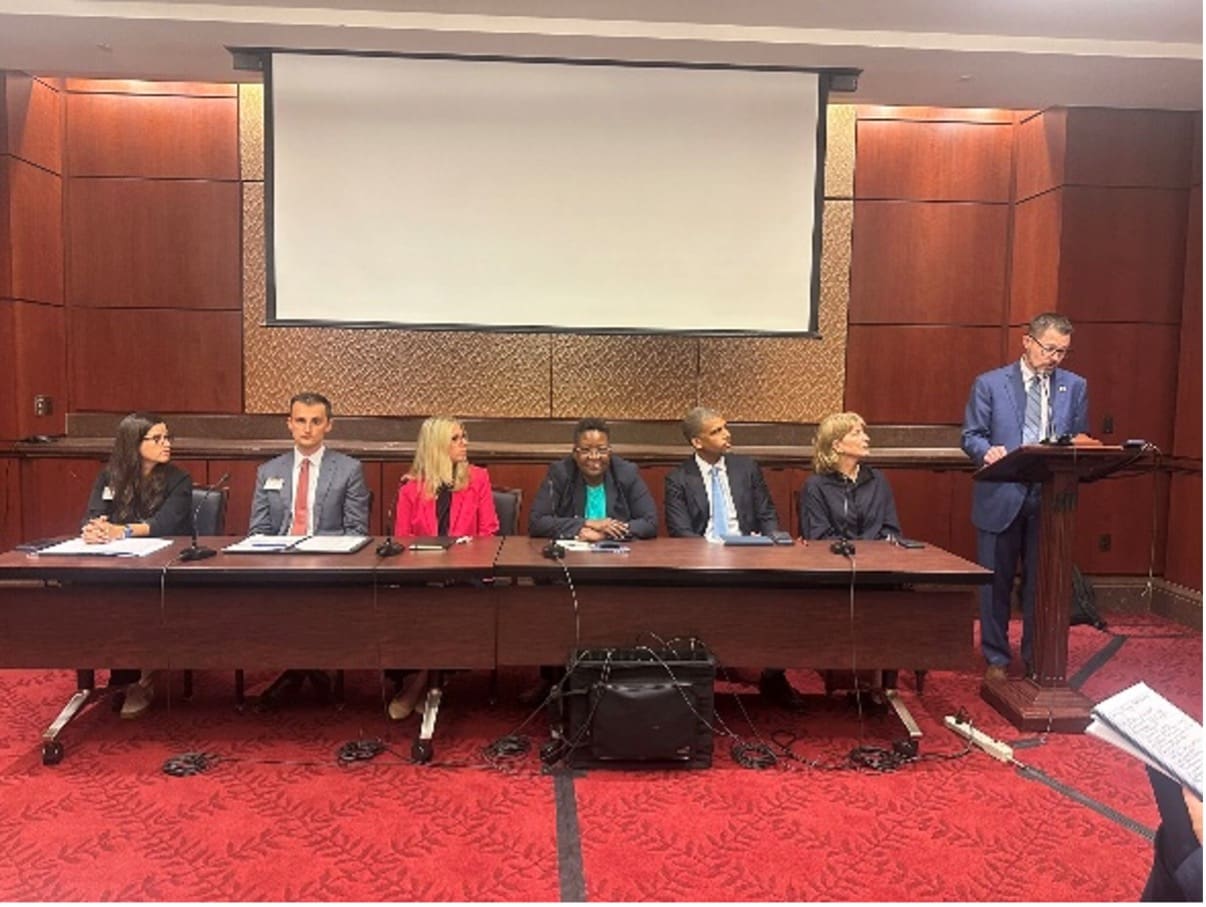
Photo: Maria Bryk for NCRC
Van Tol says every state will be affected if these proposed rules changes are adopted, particularly rural and Southern states. For example, Iowa will go from having 109 of their banks evaluated for community development to just 63, with Louisiana’s number dropping from 62 banks to only 32.
On a more positive note, the recently enacted 21st Century ROAD to Housing law contains several promising provisions championed by NCRC, like authorization for a small-dollar mortgage program.
Even though roughly one in four homes in the U.S. is valued under $200,000, the math often doesn’t work for lenders to provide smaller mortgages needed for less expensive properties, Van Tol explained. By creating incentives for lenders, such as NCRC Member CDFIs, to make small-dollar mortgages, a small-dollar mortgage program at HUD has the potential to make homeownership possible for LMI borrowers and taps into a severely underserved market.
ROAD also increases the cap that banks may invest in public welfare projects from 15 percent to 20 percent of their capital and surplus. Unfortunately, the potential benefits of that increase may never be realized with the new CRA proposal which would strip community development requirements from 800 banks and result in 400 banks no longer being separately evaluated for investments.
NCRC has developed a document outlining key takeaways regarding the Proposed 2026 CRA Rollbacks, and the organization is currently drafting a comment letter and developing a toolkit for other organizations to use in their advocacy efforts. These materials will be made available at https://ncrc.org/cra/.
Izzy Woodruff is the Communications Director for Grounded Solutions Network.