
For our September Member Spotlight, we took a deep dive into the International Center for Community Land Trusts’ history, ongoing initiatives, and hopes for the community ownership movement in the U.S. and abroad.
A Meeting of Minds
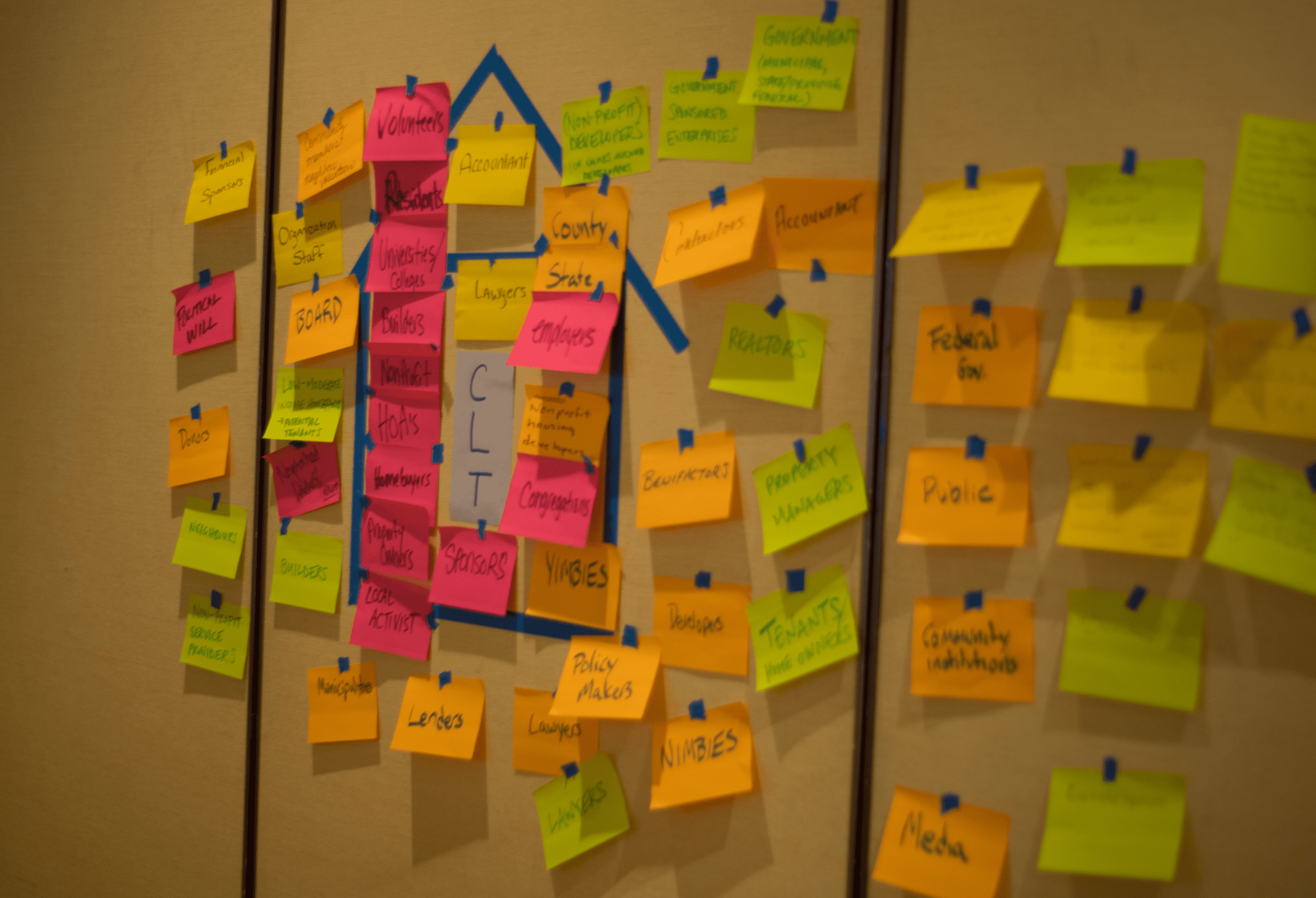
In 2009, a delegation of two dozen housing activists representing 13 countries and six continents converged on the eastern shore of Lake Champlain, in Burlington, Vt., where they were welcomed by U.S. Senator Bernie Sanders. Over the course of one week, the group learned about the community land trust (CLT) model from Champlain Housing Trust, recipient of a 2008 World Habitat Award for its work to preserve and expand permanently affordable housing. Not only did this meeting of minds spur CLT efforts in Australia, the UK, and Belgium, it laid the foundation for what would become the International Center for Community Land Trusts (the International Center) less than a decade later.

Photo Credit: Champlain Housing Trust
The Burlington study visit inspired another group of CLT enthusiasts from around the world to gather eight years later in San Juan, Puerto Rico. This visit, focused on the Global South, was hosted by the Caño Martín Peña CLT and sponsored by World Habitat. Among the attendees was Greg Rosenberg, future Executive Director of the International Center.
“I went there, and [it] just blew me away,” Rosenberg said. “I hadn’t realized the potential that community land trusts have for impacting the lives of the billion people living in the Global South in self-built communities. Some follow-up conversations started leading us in the direction of doing something more ambitious, inspiring us to form an organization focused on the international CLT movement and the role that CLTs could play in the Global South in particular.”
The Glue that Holds It Together
The following year, in 2018, the International Center was officially incorporated as a nonprofit. The current board comprises leading CLT practitioners from seven — soon to be nine — countries. And the small but mighty staff is made up of just two full-time employees: Rosenberg and Ben Harris, Director of Communications.
Prior to helping launch the International Center, Rosenberg was the Executive Director of the Madison Area CLT and was a co-founder and early staff member of the National CLT Network, which is the precursor organization to Grounded Solutions Network. Harris has a background in linguistics and a decade of experience working in communications with human rights-affiliated organizations, including United Nations University Centre for Policy Research, that has served him well in his three years with the International Center.
Over the course of its eight years in existence, the organization has already accomplished a lot. It pioneered World CLT Day in 2021 to celebrate and raise awareness about the model, launched the Global South CLT Initiative in 2023, and hosted the first-ever Global CLT Virtual Summit earlier this year. The International Center also distributes a newsletter and has published numerous reports and books through its imprint Terra Nostra Press, including one recently with the American Bar Association that highlights legal and social perspectives on the CLT model. These are just some of the resources the organization develops and disseminates to help advance the model worldwide.
The Center is like a global connector for the international CLT movement, providing tools and assistance freely while building relationships to help advance shared goals rather than seeking the spotlight for itself.
“We’re an international entity that’s supporting, promoting, and serving the global CLT movement,” Harris says.
Rosenberg says they are much more effective when partnering with others.
“It expands our reach quite a bit and enables us to take on much more ambitious projects as well,” he said. “So, where possible, we actually prefer to partner than to do things by ourselves. It’s not always a simpler approach, but it’s a much more effective approach.”
Peer Pressure (the Good Kind)

Photo Credit: Bárbara Dias (CatComm / TTC)
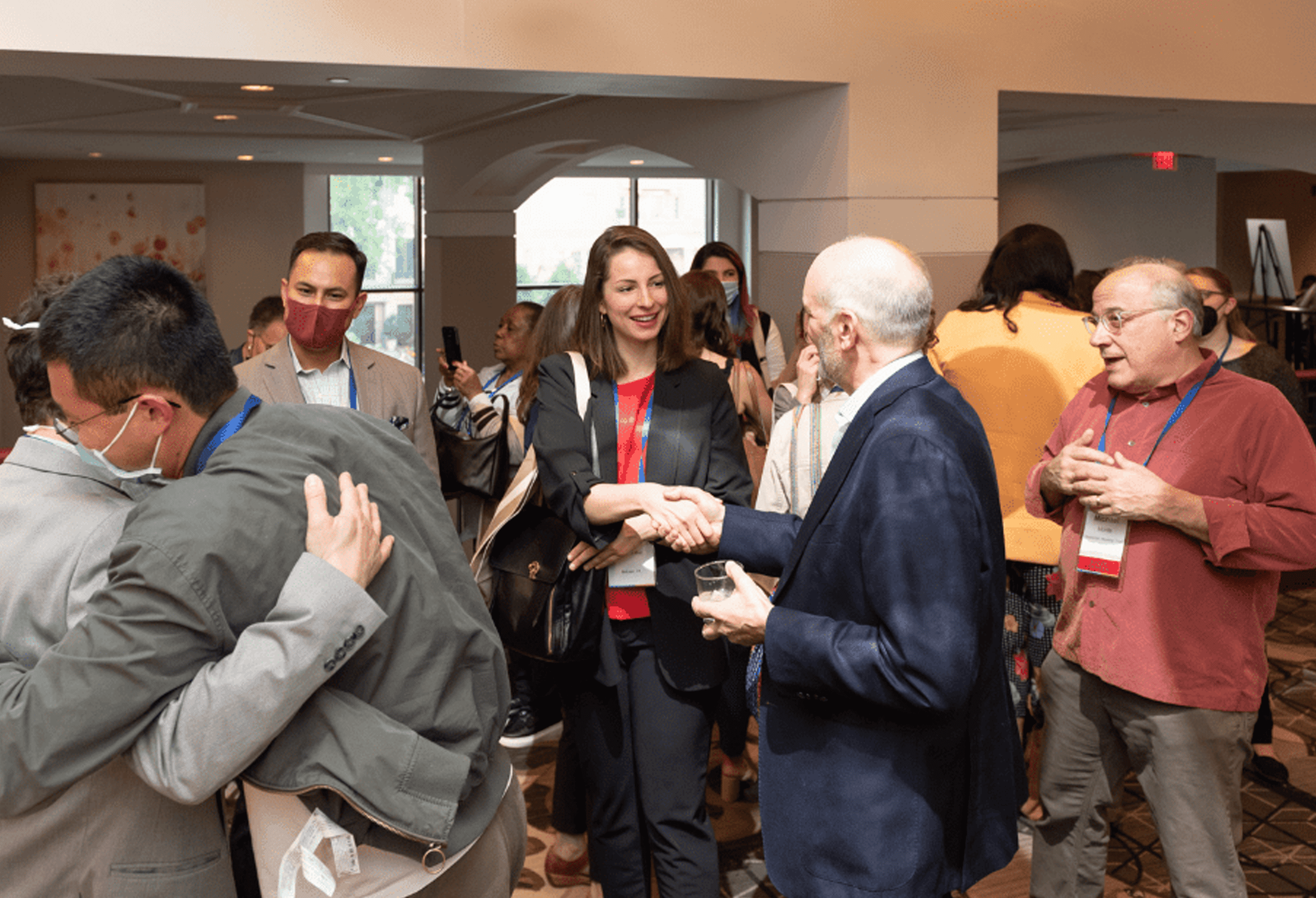
As part of its Global South CLT initiative, the Center has now engaged in and helped facilitate two peer exchanges. The first one, in April of this year, took place in Rio de Janeiro, Brazil, and was co-hosted by Catalytic Communities and Grounded Solutions Network member Rondo Community Land Trust, with support from Robert Wood Johnson Foundation. Tarcyla Fidalgo, who leads the Center’s Global South CLT Initiative, was a local host and coordinator for the Rio Exchange.
In July, Fidalgo also participated in a peer exchange hosted by the Development Action Group in Cape Town, South Africa.

“We began working with the Development Action Group a year and a half ago. We were brought together by the Lincoln Institute of Land Policy, who had worked with them for quite some time,” Rosenberg said. “We began an exploration of the application of CLTs to informal self-built communities in South Africa, starting in Cape Town. [It has] turned into a really rich and rewarding collaboration.”
What the Future Holds
“In terms of emerging work, like all organizations, [we should] be focusing on climate justice-related issues, and that’s something that we try to weave into all of our programming,” Rosenberg said. “The work of the Community Land Trust Brussels has been hugely inspirational. Their work on sustainability goes much deeper than what most of us here in the U.S. think about when we think about sustainability. They think in terms of circularity. So, from when materials are first pulled out of the ground until the house is deconstructed at the end—the whole entire life cycle.”

He added that over the past year, the International Center has also made a concerted effort to prioritize the role that CLTs can play in decolonizing land and also supporting the work of Indigenous-led CLTs. “That’s something that I really hope that we continue to lean into more and more in the coming months and years.”
If there’s one thing Rosenberg hopes that people will take away from the International Center’s work and findings, it’s the importance of cross-border and cross-cultural collaboration.
“We in the U.S. don’t have all the answers, and the more that we can be humble and learn from what’s going on elsewhere, the more we can elevate our own work.”
About this series: Each month, we’re proud to spotlight a Grounded Solutions Network member whose work is advancing shared equity homeownership and lasting affordability. Our spotlights highlight the innovative approaches, partnerships, and impact happening across the network, and celebrate the people and organizations making this work possible. Can we help elevate your work? Contact membership@groundedsolutions.org for details.